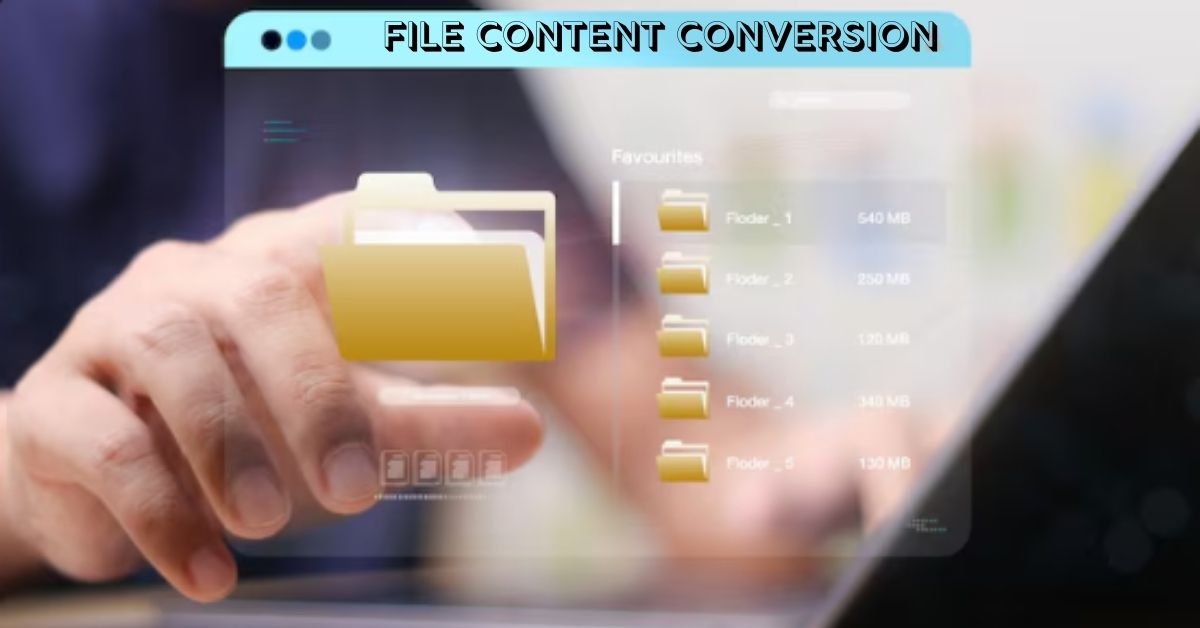
When people talk about file content conversion, they are usually talking about changing how data inside a file is structured, not just changing the file name or extension. This topic sounds technical, but the basic idea is simple. You take data written in one format and turn it into another format so systems or software can understand it better.
File content conversion is commonly used when files move between different systems. One system may read plain text, while another needs structured data like XML. The goal is to make sure the information stays correct, complete, and readable after the change. Once you understand the logic, the process feels much easier and less scary.
What file content conversion really means
File content conversion means changing the internal layout of a file while keeping the same information. The content stays the same, but the way it is written changes. For example, a simple text file may list data using commas or fixed spaces. Another system may need that same data arranged in a structured format.
This is not about editing the file manually line by line. It is about defining rules that explain how each part of the file should be read and rewritten. These rules tell the system where one value ends and the next one starts. This makes the file usable in different environments.
Will You Check This Article: How to Restore Excel File Safely and Step by Step
Why file content conversion is important
Many systems cannot read raw or unstructured files directly. They expect data to follow a clear structure. File content conversion acts like a translator between systems that speak different data languages.
Without proper conversion, data can break, go missing, or end up in the wrong place. This can cause errors, failed processes, or wrong results. Using correct file content conversion helps keep data clean, reliable, and easy to process.
It also saves time. Instead of rewriting files again and again, you define the rules once and reuse them whenever new files arrive.
Common file types used in file content conversion
Most file content conversion work involves simple file types. These include flat files like TXT, CSV, or fixed-length files. These files are easy for humans to read but harder for systems to understand without rules.
On the other side, structured formats like XML are very system-friendly. They clearly describe what each piece of data means. File content conversion often turns flat files into structured formats or converts structured files back into flat ones when needed.
How file content conversion works at a basic level
The process starts by reading the input file line by line. The system looks for separators like commas, tabs, or fixed character lengths. These separators help split the data into fields.
Next, each field is mapped to a specific place in the target structure. For example, a name field goes into a name tag, and a date field goes into a date tag. Finally, the output file is created using the new structure.
Throughout this process, the main goal is accuracy. Every value must land in the correct position. Even a small mistake in rules can cause the whole conversion to fail.
Understanding separators and structure
Separators play a big role in file content conversion. A separator tells the system where one value ends. Common separators include commas, pipes, tabs, or line breaks.
Some files do not use separators at all. Instead, they use fixed lengths. This means each field always takes the same number of characters. In such cases, the system reads data based on position instead of symbols.
Understanding the structure of the input file is the most important step. Once the structure is clear, writing conversion rules becomes much easier.
Sender side and receiver side conversion
File content conversion can happen when a file enters a system or when it leaves a system. When conversion happens at the entry point, the file is changed into a format the system understands. This is often called sender-side conversion.
Receiver-side conversion happens when the system sends data out. The internal structured data is converted back into a flat file or another required format. Both sides use the same idea but work in opposite directions.
Knowing where to apply file content conversion helps avoid extra steps and keeps data flow clean.
Handling simple and complex file structures
Simple files usually have one record per line with the same structure. These are easy to convert and test. Complex files may contain headers, footers, or nested records.
In such cases, rules must clearly define which lines belong to which part of the file. Hierarchical structures need extra care so parent and child data stays connected. Taking time to understand the file layout prevents confusion later.
Common mistakes during file content conversion
One common mistake is assuming the file structure without checking sample data. Even small differences can break conversion rules. Always review real file samples before setting up rules.
Another mistake is ignoring error handling. Files can arrive with missing or extra data. Good file content conversion setups consider these cases and fail safely instead of producing wrong output.
Also, many people forget to test with large files. A setup that works on small samples may struggle with big files if not planned properly.
Quick tips to make file content conversion easier
A useful tip is to start simple. First, convert a basic version of the file. Once that works, add more rules for advanced cases. This step-by-step approach reduces errors.
Another tip is to document your file structure. Writing down field positions, separators, and meanings helps future updates and troubleshooting.
Finally, always validate the output file. Open it and check if values appear where they should. This small step can save hours of debugging later.
Expert tip
Always keep a sample input file and a correct output file together. When something breaks, comparing these two files quickly shows where the issue is in the file content conversion logic.
Safety and accuracy considerations
File content conversion should always protect data accuracy. No value should be trimmed, merged, or lost unless clearly intended. Pay attention to special characters, date formats, and number formats.
It is also important to handle files securely. Files may contain sensitive information. Always follow safe storage and access practices when working with file content conversion.
How file content conversion fits into file education
Understanding file content conversion helps users understand how files behave beyond just opening and saving them. It shows how data travels between systems and why structure matters.
This knowledge also helps users troubleshoot issues. When a file fails to process, knowing how conversion works makes it easier to spot where things went wrong.
FAQs
What is file content conversion used for?
File content conversion is used to change how data inside a file is structured so different systems can read and process it correctly. It helps move data safely between systems that expect different formats.
Is file content conversion the same as changing a file extension?
No, file content conversion changes the actual structure of data inside the file. Changing an extension only changes the file name and does not affect how data is written.
Can file content conversion cause data loss?
If done correctly, it should not cause data loss. Problems usually happen when file structure rules are incorrect or incomplete. Proper testing helps prevent this.
Why do flat files need file content conversion?
Flat files are simple and flexible, but they lack clear structure. File content conversion adds structure so systems can understand each value correctly.
Is file content conversion hard to learn?
It may seem complex at first, but once you understand file structure and separators, the logic becomes clear. Practice with simple examples makes it much easier.
Conclusion
File content conversion is all about making files understandable across different systems without changing the meaning of the data. By learning how file structure, separators, and rules work together, users can handle file movement more confidently. Taking time to understand the input file and testing output carefully leads to accurate results. When done with care, file content conversion becomes a reliable and safe way to manage file data correctly.
Read More: file