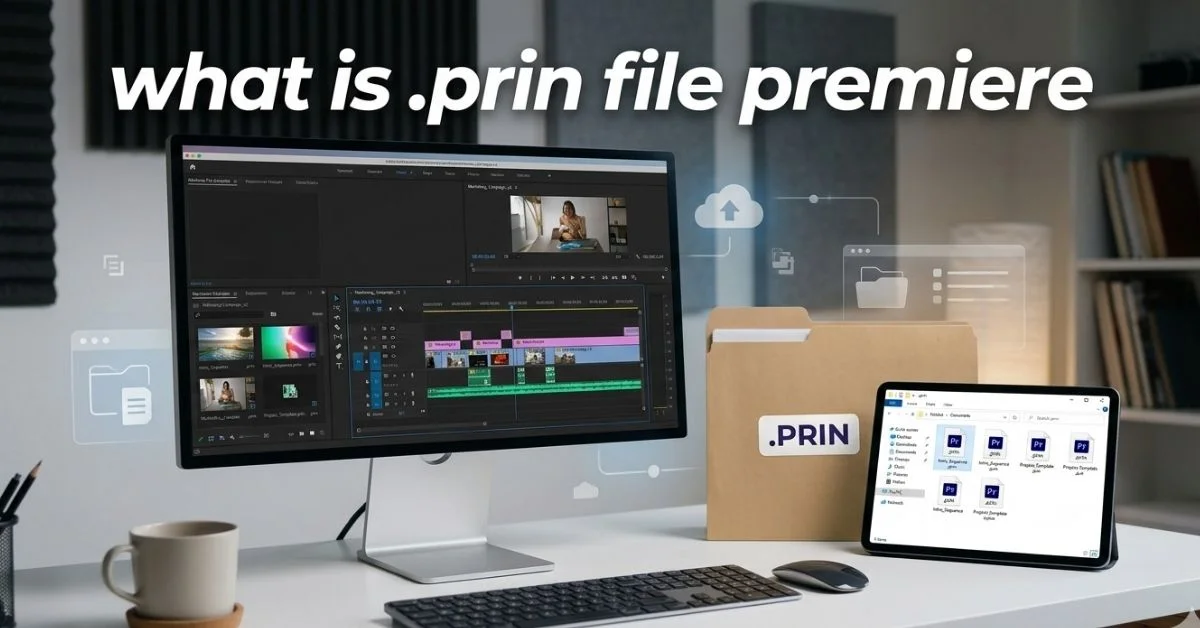
what is .prin file premiere? A .PRIN file is a specialized project file associated with Adobe Premiere Pro. Unlike general media files, it does not contain raw video or audio but stores project-specific information such as sequences, timelines, and template layouts. Its role is primarily organizational, ensuring that every linked asset, effect, and sequence parameter is retained when the project is opened in Premiere.
These files often accompany other project types and can be essential when transferring projects between workstations or collaborating with other editors. They help maintain a consistent workflow and prevent timeline misalignment. Understanding how .PRIN files operate is crucial for anyone managing professional-grade video projects.
Many editors overlook .PRIN files because Premiere’s interface primarily emphasizes the .PRPROJ file. However, .PRIN files often act as a supplementary or internal template file, supporting project templates, media references, and sequence structures. Recognizing their purpose prevents common editing mistakes and ensures smoother workflow continuity.
what is .prin file premiere?
A .PRIN file is essentially a project information file in Adobe Premiere Pro. It stores metadata about sequences, editing decisions, and project layout, rather than actual media content. This makes it lightweight yet critical for maintaining the structure and integrity of a Premiere project.
These files often work in tandem with .PRPROJ files, which are the main project files that editors interact with directly. While .PRPROJ contains the full timeline and edits, .PRIN files provide structural references for templates, sequences, and automated workflow setups.
Understanding .PRIN files also involves recognizing their role in collaboration and version control. When sharing projects across multiple systems or using Creative Cloud storage, these files ensure that sequences and timeline structures remain consistent, reducing compatibility issues and errors in large-scale projects.
Read also: Company Secretarial File Explained in Simple Terms for Everyday Business Records
How .PRIN Files Work in Premiere
The .PRIN file holds critical information about sequence settings and timeline structure. It tells Premiere how to assemble and display various media clips, effects, and transitions within the timeline. This allows editors to reopen projects with everything intact, even if they work on different machines or with multiple collaborators.
Media references are another key aspect of .PRIN files. They link your project to source footage, audio, and graphics without embedding them directly. This system keeps project files manageable in size while maintaining the integrity of the edits.
In practical terms, .PRIN files act like a blueprint. They allow Adobe Premiere to reconstruct sequences and timelines precisely as they were saved. This prevents missing media errors, timeline mismatches, or broken links that can occur when projects are transferred or restored from backups.
Differences Between .PRIN, .PRPROJ, XML, and AAF
While .PRIN files focus on project structure and metadata, .PRPROJ files store the complete project timeline including edits, clips, and effects. XML and AAF formats, on the other hand, are primarily for project exchange between different editing platforms or software.
XML export from Premiere allows you to move sequences and edits to applications like Final Cut Pro or DaVinci Resolve. AAF is similar but more suited for audio integration across editing tools. Understanding these differences is essential for collaborative workflows and cross-platform editing.
Using the correct file type ensures your project remains compatible and avoids unnecessary conversion or data loss. Editors who rely on .PRIN files as a reference alongside .PRPROJ can streamline their workflow and safeguard against corruption or missing assets.
Opening and Editing .PRIN Files
Opening a .PRIN file in Premiere is straightforward but requires awareness of its role. Typically, it is linked to a .PRPROJ file and does not open standalone in a standard editing window. Importing it into a project restores sequence templates, timeline structures, and preset configurations.
Editing these files is usually indirect. Changes in the .PRPROJ timeline or templates are reflected in the .PRIN file, maintaining a synchronized project structure. It is important to avoid renaming or moving .PRIN files outside their original project folder to prevent broken links.
Media Encoder can also interact with .PRIN-associated sequences for batch exports. While you won’t encode a .PRIN file directly, its linked sequences can be exported efficiently, saving time in larger projects. Proper understanding of this relationship is essential for maintaining a smooth workflow.
Troubleshooting Common Issues
Sometimes .PRIN files fail to load or reference missing media. Common causes include file corruption, moved assets, or incompatible plugin effects. Checking linked media paths and restoring from a recent backup usually resolves most problems.
Corrupted .PRIN files can often be replaced using Creative Cloud backups if version history is enabled. Alternatively, manually reconstructing sequences in a new project while referencing the original file ensures minimal data loss.
Plugin and codec conflicts can also affect .PRIN functionality. Ensuring all relevant plugins are installed and media codecs are compatible helps maintain project integrity, especially in collaborative environments or when using older Premiere versions.
Backing Up and Recovering .PRIN Files
Backing up .PRIN files is critical for project safety. Manual backups can be made by copying project folders along with .PRIN and .PRPROJ files to external storage. Creative Cloud offers automatic versioning and sync, making recovery straightforward.
File recovery tools specifically designed for Premiere projects can restore corrupted .PRIN files. These tools analyze metadata, sequence information, and linked assets to reconstruct project structures without losing timeline information.
Regular backup routines also reduce downtime during collaboration. By storing .PRIN files alongside project assets, editors can avoid mismatches, lost edits, or broken sequences when projects are shared across teams or devices.
Optimizing Your Workflow
Efficient management of .PRIN files can improve project performance. Organizing sequences, templates, and linked assets reduces project load times and minimizes errors during editing.
Large projects benefit from segmenting timelines into smaller sequences. Using .PRIN files to maintain templates and sequence layouts ensures consistent structure without overloading the main .PRPROJ file.
Cross-platform collaboration is also streamlined. Editors can move projects between workstations while keeping .PRIN files intact, ensuring everyone works with the same sequence templates, timeline structures, and media references.
Real-World Examples
In professional environments, .PRIN files are often used to standardize project templates for multiple editors. For example, a broadcast team may use .PRIN files to maintain consistent graphics, intros, and sequence layouts across daily episodes.
Independent filmmakers rely on .PRIN files to manage complex projects with multiple scenes. Each sequence can be referenced without increasing project file size, making it easier to share with collaborators or editors working remotely.
Educational institutions use .PRIN templates to teach editing workflows. Students can start with predefined sequence settings and timelines, focusing on creative editing without spending time on structural setup.
Additional Resources
Adobe provides extensive documentation on project file types, including .PRIN, .PRPROJ, and supported media formats. Accessing official guides ensures editors understand file compatibility, import/export workflows, and template management.
Tutorials and online guides supplement official documentation by offering practical insights into real-world workflows. Forums and community discussions often highlight common issues with .PRIN files and solutions tested by experienced editors.
Staying informed about plugin updates, codec compatibility, and Creative Cloud version changes ensures that .PRIN files remain functional and reliable throughout your editing projects.
Conclusion
Understanding .PRIN files is essential for maintaining organized and efficient Premiere projects. These files store sequence layouts, timeline structures, and template references that keep your editing workflow consistent and reliable. Proper handling, backups, and use of Creative Cloud tools prevent data loss and simplify collaboration across devices. Recognizing the difference between .PRIN and other project formats ensures compatibility and smoother project management. By integrating these practices, editors can optimize performance, avoid errors, and maintain professional-quality projects. Apply these insights to your workflow to improve editing efficiency and project reliability.
Read More: file
FAQS
what is .prin file premiere Pro?
A .PRIN file is a project information file in Adobe Premiere Pro that stores sequence layouts, timeline structures, and template references without containing the actual media.
How do I open a .PRIN file?
.PRIN files are typically linked to a .PRPROJ project and open automatically when the project is imported in Premiere. They are not meant to be opened standalone.
Can I convert .PRIN files to another format?
.PRIN files themselves are not directly converted. You can export sequences or projects that reference them using XML, AAF, or standard media exports.
Why won’t my .PRIN file open?
Common reasons include missing linked media, corrupted files, or plugin/codec incompatibility. Restoring from backups or checking asset paths usually resolves this.
How do I backup .PRIN project files?
Back up the entire project folder, including .PRIN and .PRPROJ files, manually or via Creative Cloud sync to ensure sequences and templates are preserved.
Are .PRIN files compatible with older Premiere versions?
Compatibility may vary. Older versions might not recognize newer sequence templates or effects, so using the same Premiere version or exporting via XML/AAF ensures consistent results.